Tired But Wired? Why You Don’t Need to Be Calm to Recover From Insomnia
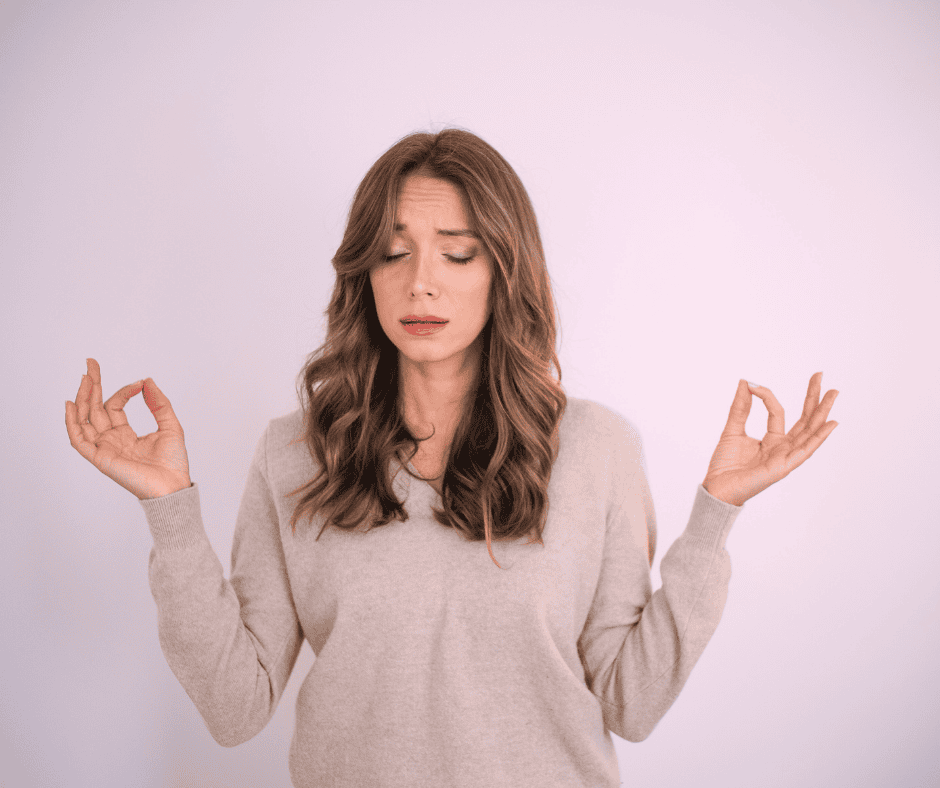
Feeling tired but wired may be the most irritating paradox insomniacs grapple with. The heavy-lidded overwhelming exhaustion coupled with a buzzing brain is a puzzling burden to bear.
Common sense leads insomniacs to believe they need to calm down in order to recover. While on the surface this seems like sensible, this post digs into why it ultimately sets you up for failure, and what to do instead.
Why Am I Tired but Wired Before Bed?

Being tired but wired does not mean that your body or brain is defective. It’s a very common yet poorly understand part of insomnia. It’s a signal that your nervous system is in high alert mode, i.e. hyperarousal. When your body goes into this fight or flight state, it produces adrenaline, spikes your cortisol levels, and gets you ready to mobilize for action so you can ward off danger. This is, of course, not a recipe for sleep - what we really need our body to do at that moment is the exact opposite. So, why is this happening just before your head hits the pillow?
Over the course of many sleepless nights, an insomniac’s brain learns to perceive being awake at night as a threat, obsessively scanning for anything that could disrupt sleep. This can be something external, like loud traffic noises (my personal sensory nightmare), or internal, like an anxious state of mind. As soon as the survival brain notices any external or internal threat, it sounds the sirens, and you’re back in fight or flight. This is why you may barely be able to keep your eyes open at 2 pm, only to find yourself staring at the ceiling at 2 am.
Don’t I Need To Be Calm To Sleep?

This question often comes up in my sessions with clients. It makes sense - I held the same belief for years. If you can just find a way to calm down you’ll be able to sleep, right?
But, think back to before you had insomnia. Were you always in a calm state every time you slept decently? The resounding answer I usually get is No. It’s normal to not always be in a calm state before bed. Before insomnia, our survival brains weren’t hypervigilant about anything it thought could disrupt sleep though. The brain then can even fear a non-calm state of mind. Before insomnia though, it’s likely that you didn’t get anxious when you had a bunch of thoughts floating around your head at night. The inner chatter was allowed to be there and dissipate on its own as you descended into dreamland.
The idea that you need to be calm to sleep can be inaccurate and problematic. It becomes a precondition that insomnia sufferers think they need to attain in order to sleep, which can add pressure. You think you need to chase it, but sleep is passive - it needs the opposite of pressure so our bodies can do what they already know how to do.
Then, what happens when you’re not in a state of calm before bed? Your survival brain sees this as a threat, and you’re even less calm than you were a moment ago, all because you got stressed about not being calm. And here lies paradox number 2: trying to get calm to resolve insomnia often makes it worse.
The Chessboard Metaphor

I love metaphors - one of my favorites to illustrate this came from psychologist, Dr. Russ Harris, an expert in Acceptance Commitment Therapy, the main approach I use to support folks with insomnia.
Trying to be calm can easily put us in an internal struggle, like we’re playing a chess game with our positive thoughts and feelings, competing against our negative ones. We then try to ‘get calm’ so we can wipe out the negative thoughts and feelings. As Harris points out though, we don’t just have one set of chess pieces on either side. Our brain can produce infinite thoughts and feelings on both sides. Where does this lead us? Well, as soon as you feel like you’re relatively calm, you might get a positive thought. ‘Great, time for me to go to bed.’ Except, that can easily lead to a negative thought, like ‘What if this state doesn’t last? What if I get anxious again?
Do you see how this could go back and forth all night?
So, then what? As Harris puts it, ‘what if we could learn to be like the board?’ The chess board is in contact with the negative and positive thoughts and feelings, and it makes space for them, but it doesn’t battle with them.
When it comes down to it, this is what Acceptance & Commitment Therapy is all about- being able to take a step back so you can allow uncomfortable thoughts and feelings rather than fight them.
What Actually Helps When You’re Tired But Wired

In order to be more like a chessboard, it’s important to acknowledge what’s happening in the moment — without needing to change it right away. One of the biggest misconceptions of mindfulness is that it’s about trying attain a level of zen-like calm. In practice, it’s more about learning to be more present with your thoughts, emotions and sensory experiences, whether they are pleasant, uncomfortable or even painful. This does not mean that you have to needlessly force yourself to suffer through them, though. There’s room to support your brain and nervous system gently while also learning to be with some of the discomfort. This is how you start to change your relationship with sleep.
While this is a big topic I can’t fully tackle in one post, here are a couple practices to begin the process.
Naming & Acknowledging Uncomfortable Thoughts & Feelings
Name the anxiety as an anxious part or your survival brain
When we’re in our suffering, it’s very hard to notice and take a step back. One of the simplest, first steps towards this is to give your suffering a name. In this case, let’s call it the anxious part. Every time it comes up, name it. This invites separation between you and the anxiety.
2. Acknowledge the thought / emotion.
If the way out of insomnia is to become more like the chessboard — not fighting the pieces — then naming isn’t enough. There needs to be acknowledgment. This is where you hear out the anxious part of you and offer it a response.
Often, it’s easy react to the initial anxiety. With insomnia, it’s often another fear-based emotion. So, then you are anxious, and subsequently worried about being anxious. Another common one is frustration - you think, ‘ugh, here it is again!' all these fearful thoughts - how annoying! ‘ Acknowledgement is the next step towards getting out of this cycle.
How do you acknowledge the anxious part of you?
In Acceptance & Commitment Therapy (ACT), the main approach I use to support insomnia recovery, one classic technique is to respond with: ‘Thank you, mind.’
I like to provide clients with some variety as well, so they can experiment with what fits most naturally for them. If ‘Thank you, mind’ doesn’t quite feel true, here are some other options:
‘It makes sense that this part of me is worried.’
‘I hear what you’re saying’
‘Thanks for letting me know.’
'I can tell you’re really trying to get my attention.’
Instead of colluding with the anxious part about not being relaxed, you’re naming it as a separate part of you, and acknowledging it. This is how you start to take a step back and become the board.
Supporting Yourself Kindly
When you have some space from the anxiety, you then have options for taking care of yourself gently. How can you offer yourself some kindness or gentleness? What might feel soothing to your senses?
This could be:
Simply breathing deeply with a hand on the heart or belly
Finding comfort in your favorite sensory object (I love my acupressure mat and weighted blanket)
Listening to pleasant music or sounds
Engaging with taste or smell (essential oils, or a cup of tea for example)
First off, while we’re not trying to force calm, there is nothing wrong with caring for yourself in calming ways, whether that’s bedtime tea, a wind down routine, journaling, stretching, or meditation. These can all be wonderful ways to support your nervous system. I, for one, love my sensory comforts. I know my weighted blanket is not a magical device that produces sleep for me, but I still love sleeping with it every night.
Remember, none of these are meant to force sleep or create a perfectly calm state. They’re just ways to make the moment 5–10% more comfortable. When the pressure drops, your body often finds its own way into rest eventually without you having to chase it.
Recovering from insomnia isn’t about forcing yourself into calm. It’s about shifting how you relate to the thoughts, sensations, and emotions that show up when you’re tired but wired. It’s completely human for anxiety to spark more anxiety — none of us choose that. But you can learn to meet that reaction with a gentler response, even if a fully calm state isn’t available at the time.
References
Dr. Russ Harris – The Psych Show. (2024, October 9). Internal struggles: The chessboard metaphor and ACT [Video]. YouTube. https://www.youtube.com/watch?v=phbzSNsY8vc
If my words resonate and you're looking for support from someone with both clinical training and lived experience, book a free 20-minute consultation here to see if insomnia coaching with me feels like a good fit.